Bring Out Your Banners
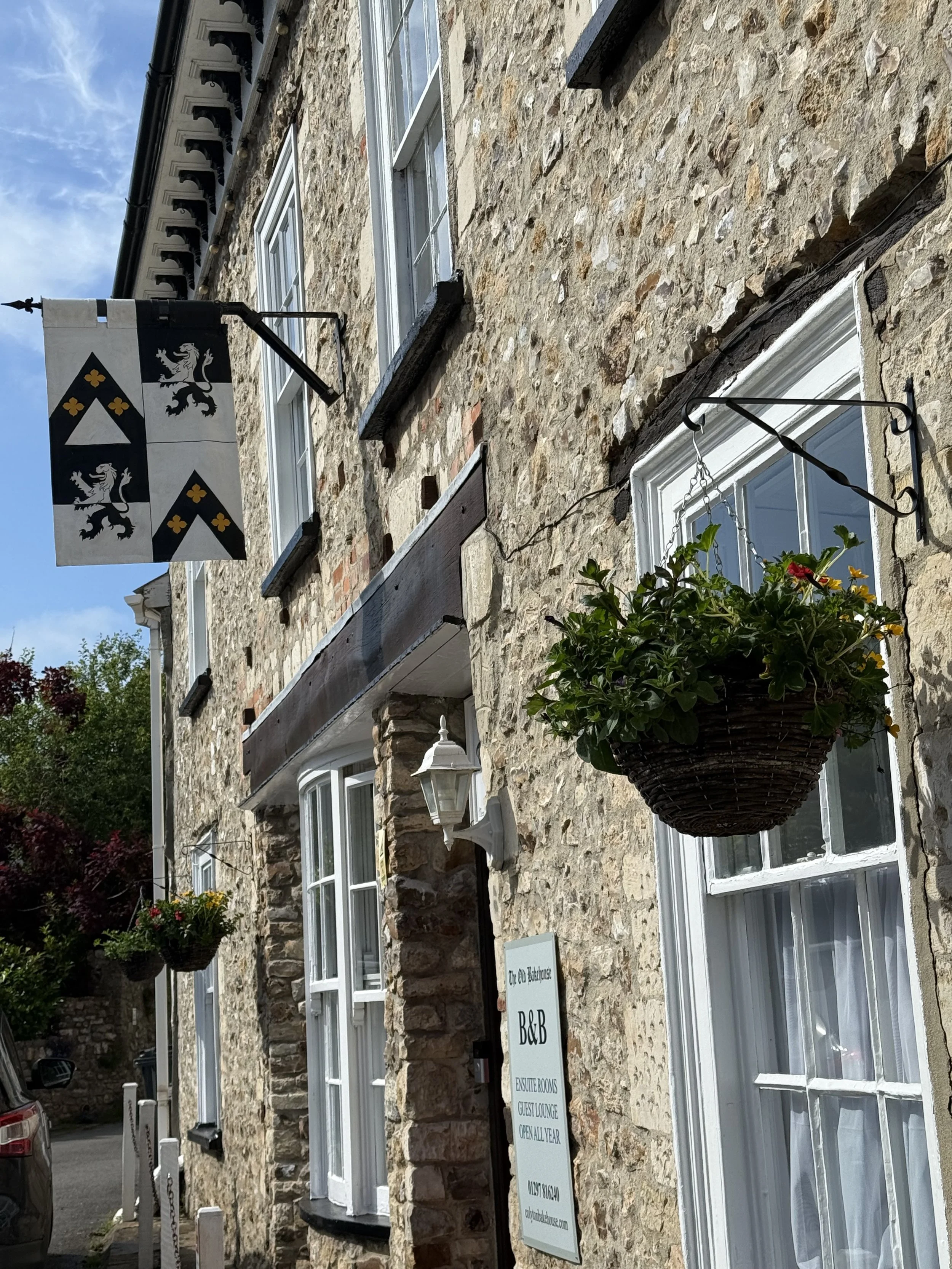
As you walk along the streets of Colyton in summer, look up and you will see dozens of heraldic banners gently swaying in the breeze.
These heraldic designs adorning the town’s historic buildings are not just decorative; they act as a public record of the families and institutions that have governed, defended, and funded this parish for over five centuries.
Launched almost ten years ago by the Promote Colyton Group, 38 banners celebrate important historical families and landowners from the parish’s history and typically fly every summer.
The bright idea resulted from a group trip to Tewkesbury, where they also display medieval banners throughout the streets. The members came home impressed and set about designing, printing and hand-painting Colyton's own flags. They were produced by Colyton curtain supplier Needlesharp, with painting sessions held at St John’s Hall. Meanwhile, wheelwrights Mike and Greg Rowlands designed and forged the metal brackets to support the banners from the buildings.
Unlike traditional flags, which may use symbols, colours, or logos, a heraldic banner spreads an individual's or family's precise armorial bearings (crest, colors, and charges) across the entire fabric.
Among the banners, outside The Old Bakehouse, you will see that of Commander George Eyre Powell RN (1790-1855), who in 1817, joined HMS Heron under Captain Herbert Brown, serving at St Helena. During that time, he was involved with the prisoner Napoleon Bonaparte. Cmdr Powell later served on HMS Victory after the Battle of Trafalgar.
In 1819, Cmdr Powell married Catherine Kingdon from Colyton. The couple first lived in Dorset, but in 1826, moved to Colyton, where they bought Colyton Cottage.
The most prominent heraldry belongs to the Courtenay family, the Earls of Devon. Their arms - three red circles on a golden field - are a recurring motif throughout the county.
Historically based at Colcombe Castle on the edge of town, the Courtenays were the primary feudal lords of the area. Henry Courtenay, as a young boy, was treated kindly by Henry VIII and later made a privy councillor in 1520.
He advised the king on the annulment of his marriage to Queen Catherine of Aragon, signed papers for the prosecution of Cardinal Wolsey and also acted as a commissioner at the trial of Anne Boleyn, the king's second wife, who had been accused of adultery, incest and high treason.
As paranoia overcame Henry VIII, Courtenay, himself was later executed after he was found to be in correspondence with the self-exiled Roman Catholic Cardinal Reginald Pole.
Another powerful family with their own banner are the Poles who originally lived at Colyford Manor House during the 15th century. Their banner is azure blue with a fleur de leys design over a lion.
Sir William Pole (1561–1635) was a lawyer and MP for Lyme Regis. Following the dissolution of the monasteries, he speculated in church lands and amassed huge wealth. He later leased the manor of Shute. The Pole family became Lords of the Manor of Colyton after the Courtenays lost it. When Colcombe Castle came into possession of Sir William Pole the antiquarian, it was in ruins and he rebuilt it and made it his main residence.
At the northern end of the town, behind a high stone wall is the Great House, once home of the Yonge family.
Their ermine banner with three griffins' heads represents a family that rose to prominence through the wool trade and legal profession. John Yonge of Colyton was an eminent merchant, and in 1588 Queen Elizabeth I granted him a patent to explore the river trade of Senegal and Gambia.
His wealth enabled him to build the Great House. In the latter half of the 18th century, the Great House became the property of the Pole family.
One of the most historically significant banners is that of the Colyton Chamber of Feoffees.
The Feoffees are a charitable body, established in 1546. Following the execution of Henry Courtenay, the manor of Colyton was transferred to the Crown. In a rare move for the time, the townspeople organized to buy back the land and the rights to the local market for £1,000.
The Chamber of Feoffees was formed to manage these assets for the ‘benefit of the inhabitants’ and ensure that all profits be used for 'goodly, godly and commendable uses as they should determine'. Their heraldic banner is a symbol of Colyton’s long-standing independence and self-governance. This local autonomy is arguably what fostered the strong spirit of the Colyton hundred in the Monmouth rebellion.
In the language of the times, the Feoffees arms are described as: ‘Azure, on a chief a semi of fleurs-de-leys Or, a lion rampant Argent, Or a fess with two roundels Gules, party chevron wise Azure with a saltire Argent’. They are also the arms of Colyton Parish Council.
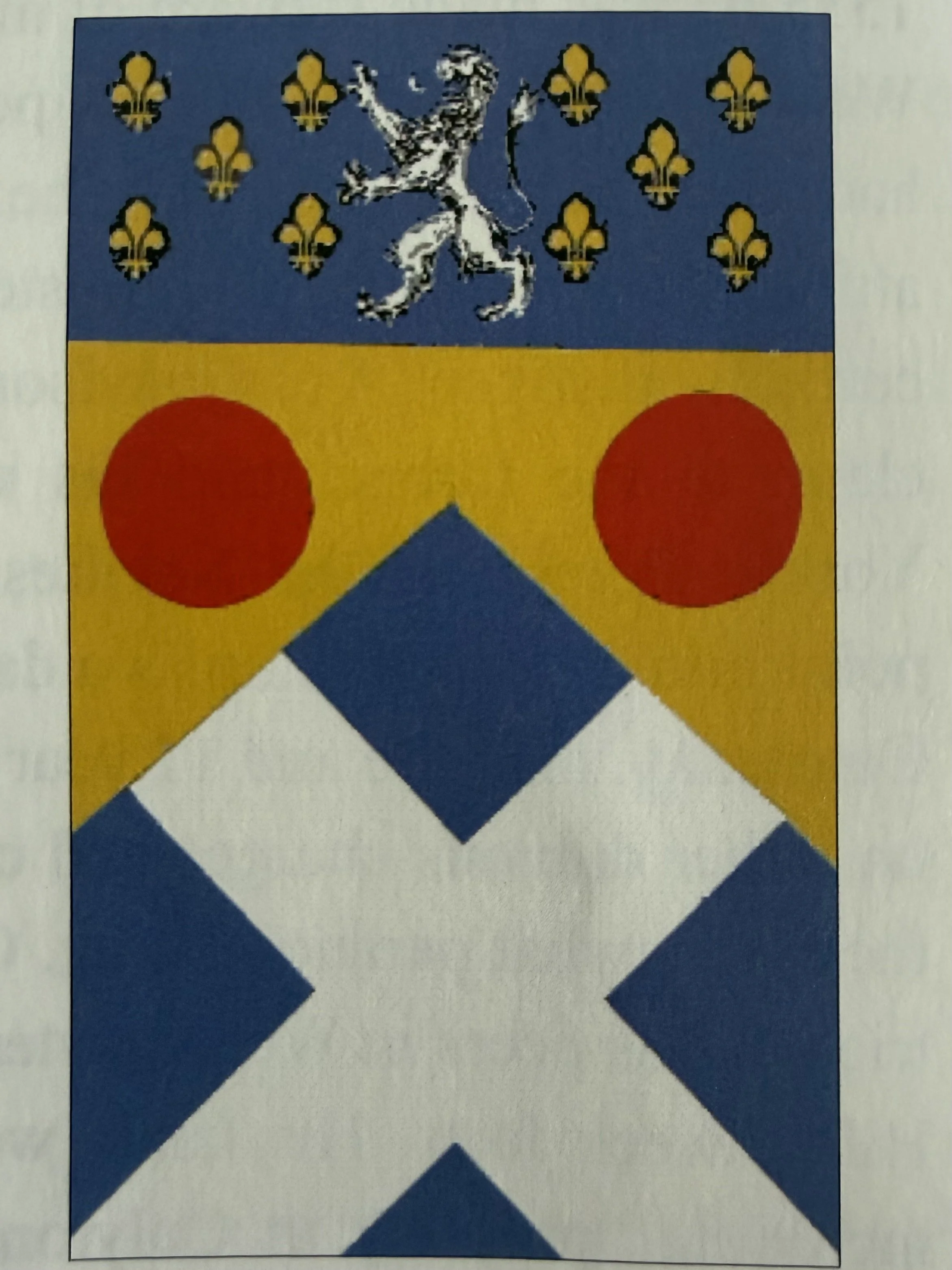
Banner for the Colyton Feoffees
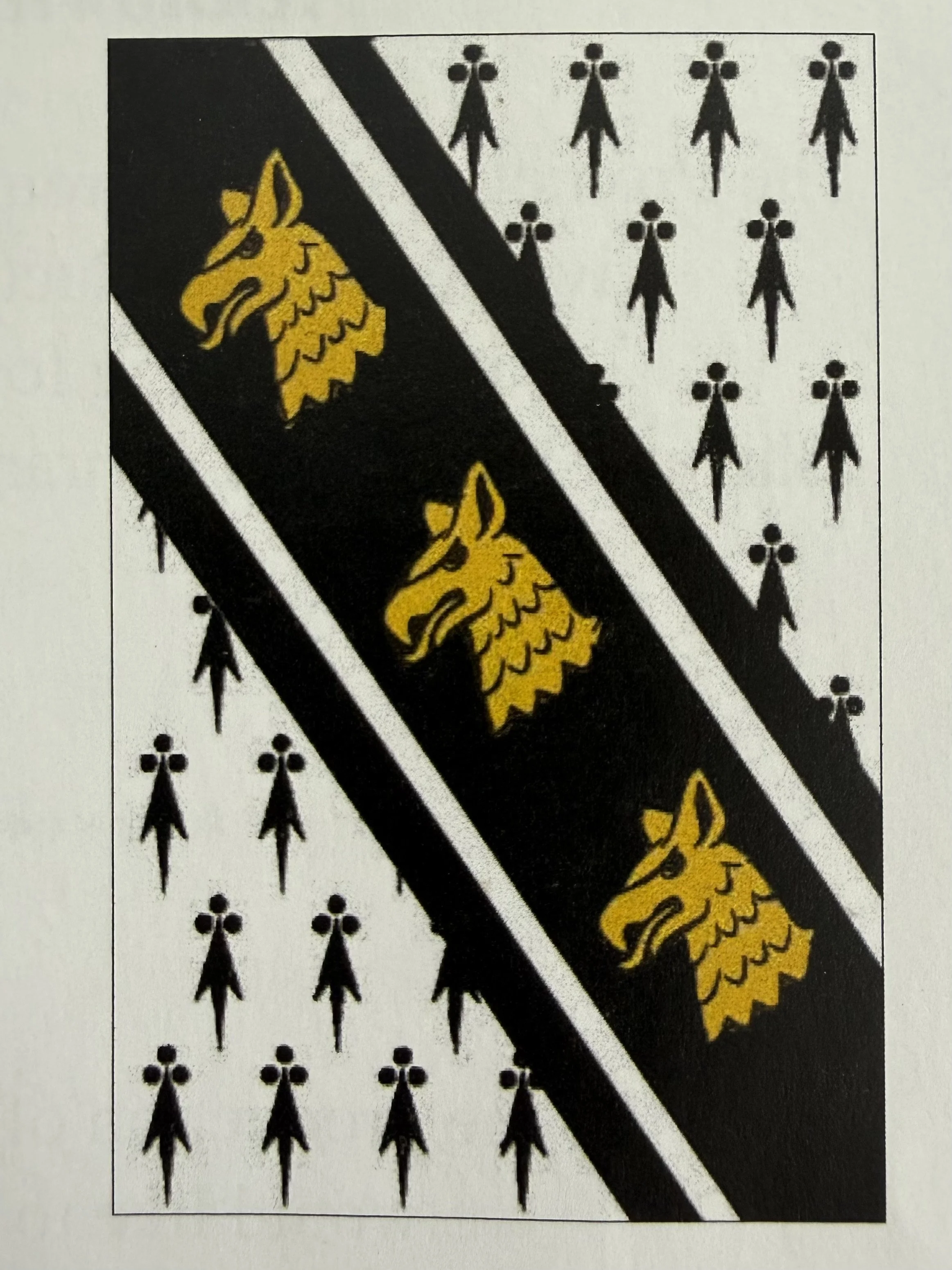
Banner for The Yonge Family
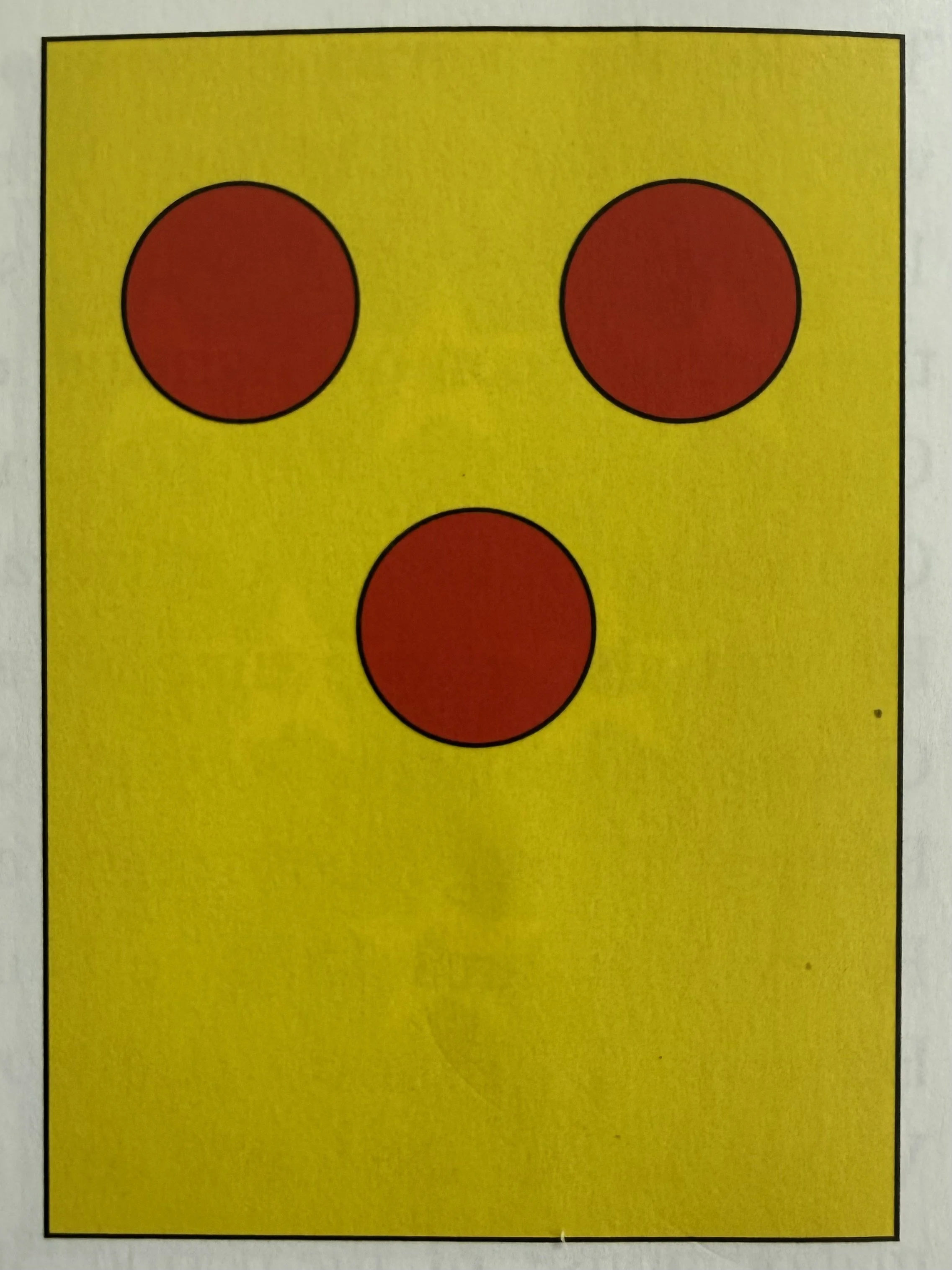
Banner for Henry Courtenay
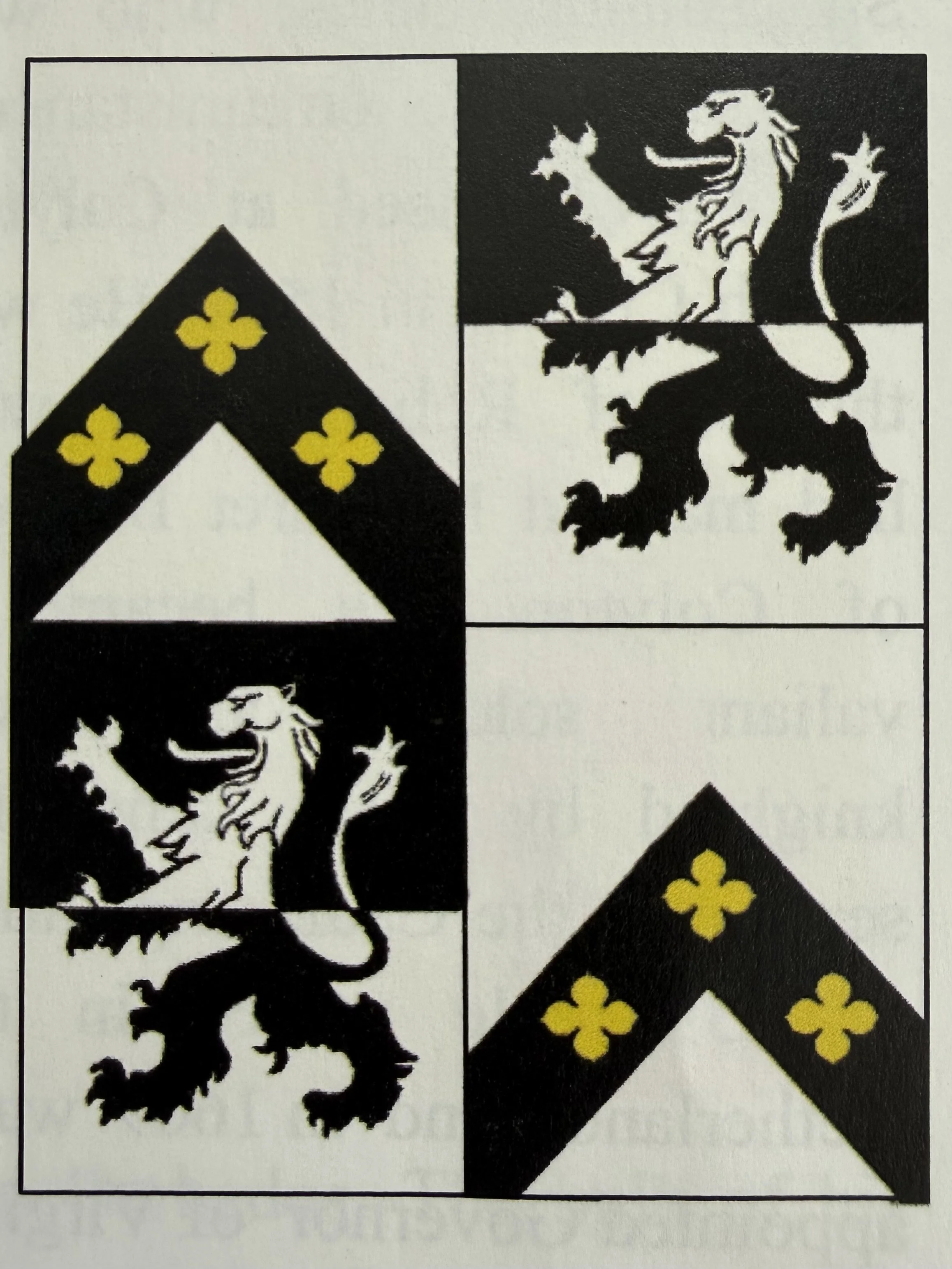
Banner for Cdr. George Eyre Powell RN
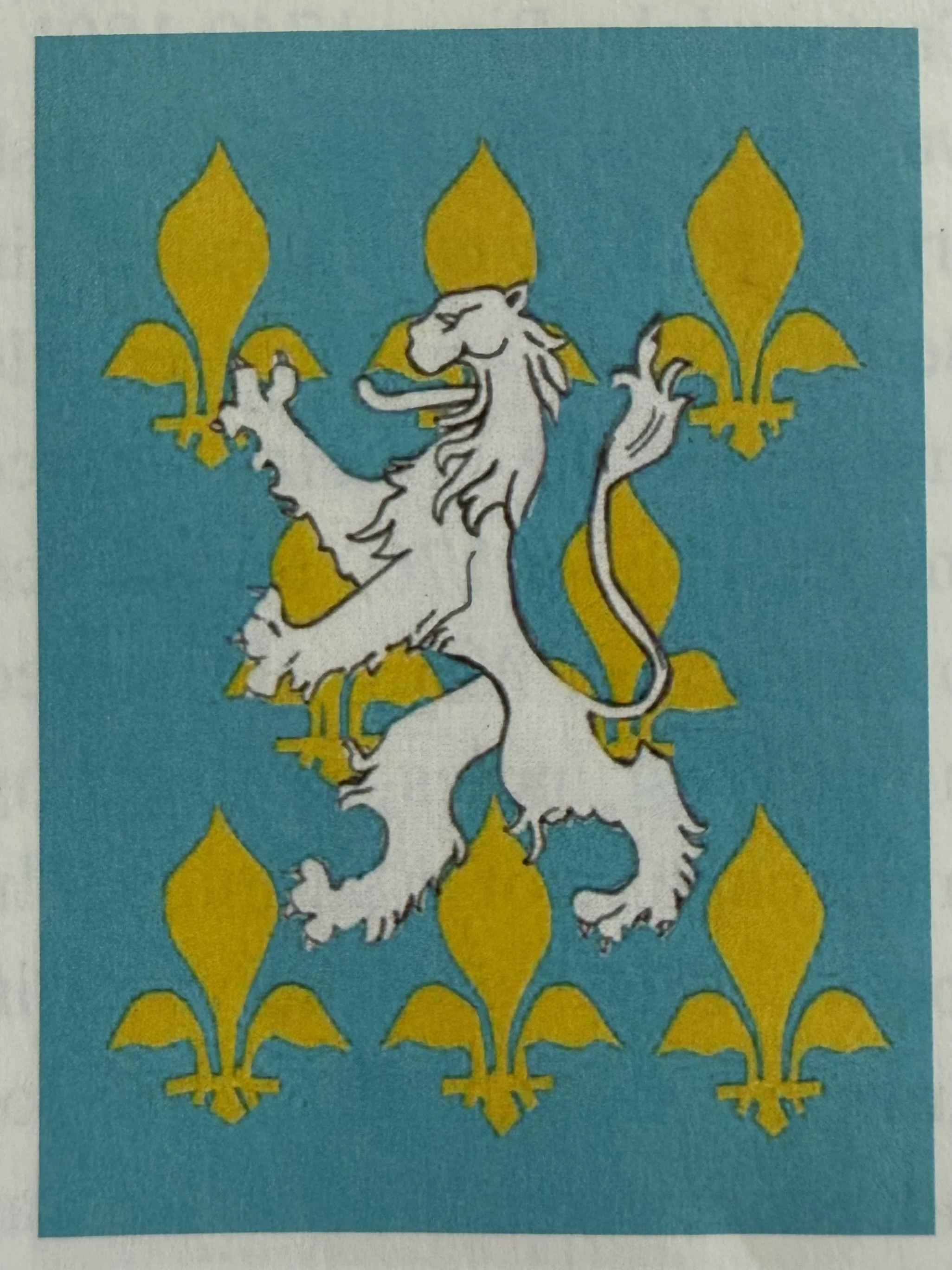
Banner for the Pole Family (De La Pole)